
If you offered an employee a Rs 60,000 annual raise versus a Rs 60,000 device benefit, almost everyone would pick the raise. That is not because the raise is the better deal. It is because cash feels real and benefits feel like fine print.
The interesting question is what happens between the gross number and the bank balance. The answer is often counter-intuitive enough that it changes how people think about their compensation.
This post is a general overview of why benefit-led compensation has become a real lever in 2026, written in plain English. We are not going to walk through every line of the maths. The exact answer for any individual employee depends on their slab and structure. What we will do is build the intuition.
The simple version of what happens
Every rupee of salary moves through the same set of deductions before it reaches the employee's account. Some of those deductions are unavoidable, some are statutory, some are tied to how the compensation is structured.
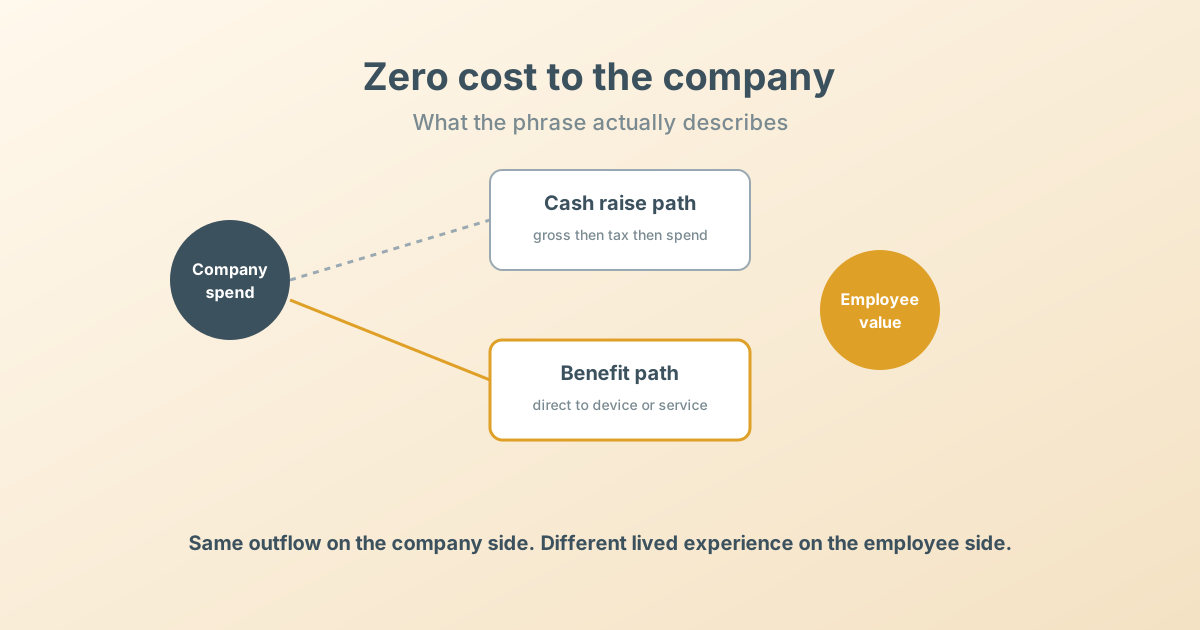
Some forms of compensation move through fewer deductions than others. That is the entire trick. When an employer offers a benefit instead of an equivalent cash raise, the employee sees more of the value, because the path from "company spend" to "employee enjoyment" is shorter.
The polite name for this is "tax-efficient structuring." The honest name is "using the salary architecture that already exists." There is nothing exotic going on. The architecture has been there for decades; it was previously the preserve of senior executives with bespoke packages.
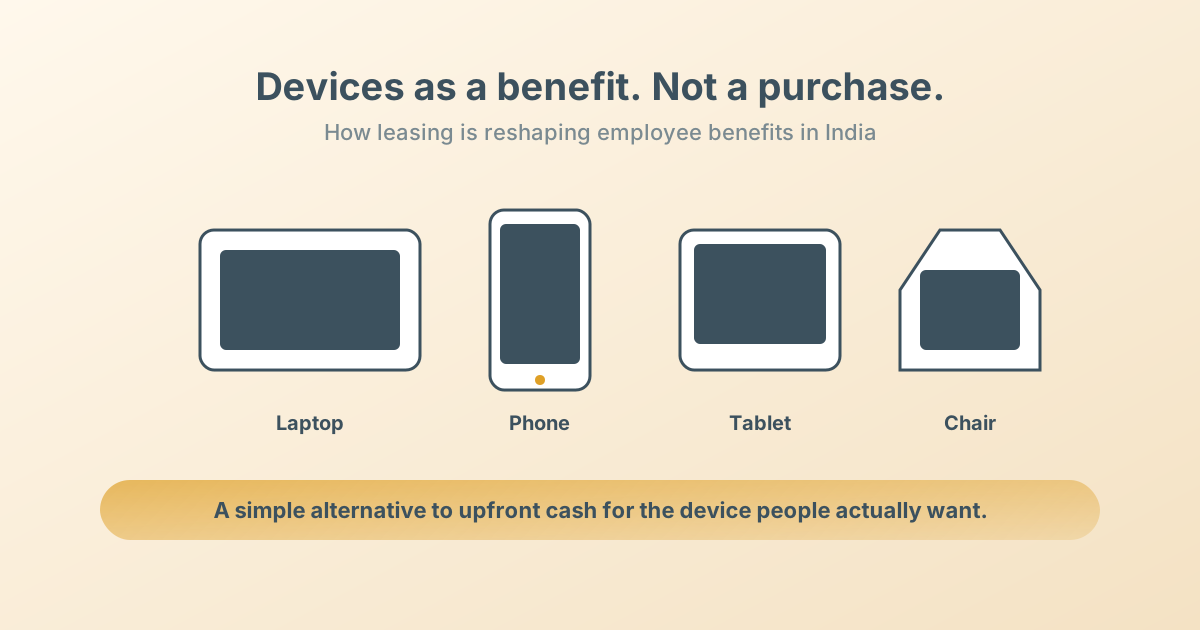
What changed in the last few years is access. Modern platforms have made the same logic available to a graduate engineer in their first job. Device leasing is one expression of that shift.
Why "feels like more" is not the same as "is more"
The trap is that a raise is legible. The employee sees their CTC go up, their offer letter looks better, their LinkedIn says "promoted." A benefit feels softer; it is harder to brag about a leased laptop.
But the actual measure of compensation is what the employee can do with the money. If a Rs 5,000 monthly device benefit lets the employee enjoy a device that would otherwise cost them Rs 8,000 a month after tax, the math is on the benefit's side, even though the offer letter looks less impressive.
EY India's Future of Pay 2026 report makes this point directly: India Inc.'s salary growth is moderating to around 9 percent year-on-year, with sharper differentiation by performance and skills.[¹] In that environment, employers cannot lean on raw cash to compete. The richer companies are leaning on total rewards.
EY's broader work on holistic rewards estimates that employees value comprehensive flexibility at a substantial premium over equivalent cash compensation alone.[²] The number itself is in the report; the point is that it is meaningfully large. A well-designed benefits bundle does not just match a cash raise; it can beat one.
What this looks like in practice
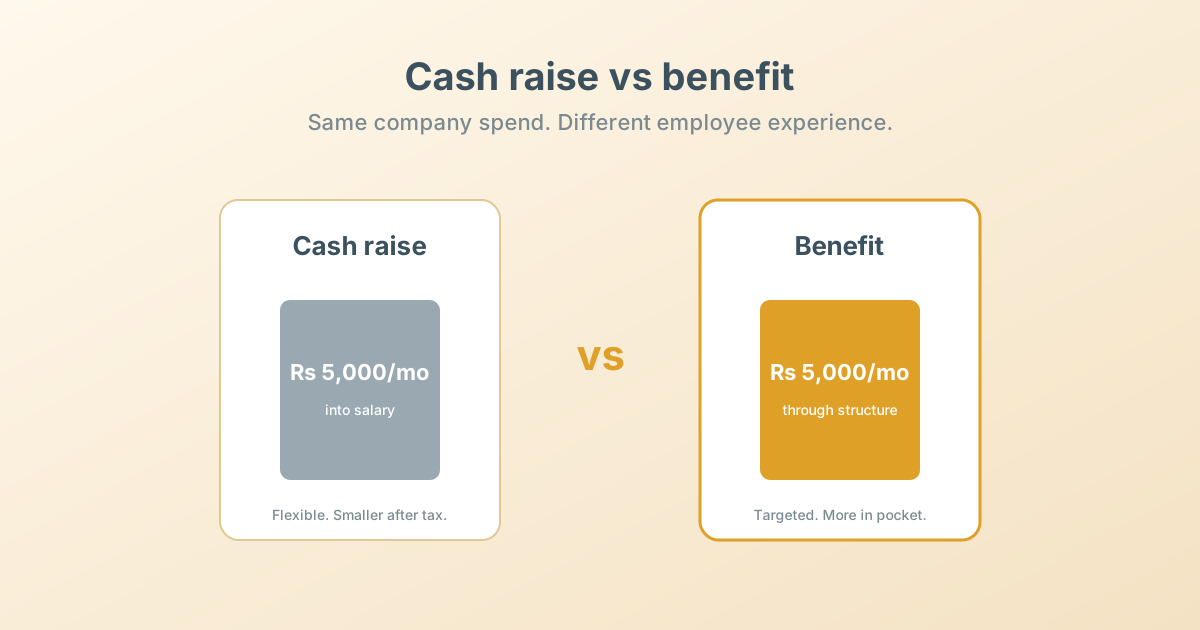
Imagine two employees with identical roles. One gets a Rs 5,000-a-month cash raise. The other gets a Rs 5,000-a-month device benefit through their employer.
Both are out the same number on the company's books.
The first employee sees the increase in their gross, then in their net after the usual deductions, then has the option to spend that money on whatever they like, including a phone or laptop.
The second employee uses a phone or laptop they would have wanted anyway, and sees a smaller dent in their net than if they had paid for the device themselves.
In which scenario does the employee come out ahead? It depends on whether they would have bought the device anyway. If yes - and most knowledge workers do refresh devices every two to three years - the benefit wins on hard arithmetic. If no, the cash wins, because cash is the more flexible form.
The honest career advice we give to friends is: take the benefit when the device matters to you, take the raise when it does not. Both can be right.
Why employers are leaning in
For employers, the appeal is simpler.
A cash raise hits the salary line, compounds into next year's increment base, and sets a precedent. A structured benefit sits in a different part of the package, does not necessarily compound, and lets the employer offer a meaningful upgrade in lived experience without adding to the salary baseline.
That sounds like the employer winning at the employee's expense, but in practice both sides usually come out ahead. The employer pays less to deliver the same perceived value. The employee gets a real upgrade in day-to-day life. The shape of the package is different, the substance is good for both.
The Nasscom workforce work on hybrid models has consistently shown that Indian knowledge workers value flexibility and equipment-quality as much as headline cash.[³] When companies offer both, retention numbers move.
Where this falls down
There are scenarios where the benefit path is worse than a raise.
If the employee never uses the device, the value collapses. This is why programmes that let employees choose what they want, from a real list of options, outperform programmes that hand everyone the same laptop.
If the employee is in a low tax slab, the structuring advantage shrinks. The savings come from the difference between how cash and benefits are taxed, and if both are taxed lightly, there is less ground to gain.
If the benefit comes bundled with restrictions that make the device worse - locked configurations, no take-home rights, hard return clauses - the employee is right to prefer cash. Good programmes do not have these problems. Bad programmes do.
This is why HR teams have started reading the small print on benefits providers rather than just signing on price. The employee experience is what decides whether the benefit gets used.
The point that gets lost
The most important thing to remember is that compensation is not the same as cash.
For most of the last fifteen years in India, the conversation around take-home has been dominated by gross salary numbers. That was reasonable when benefits were thin and tax structures were rigid. It is less reasonable now, when a thoughtful benefits design can add meaningful real value on top of cash.
The employees who internalise this think about their package in two columns: cash and structure. The companies that internalise it design packages to win both columns. The intersection is where 2026's interesting compensation experiments are happening.
Where to read next
- How device leasing is changing employee benefits in India
- Buy vs lease vs EMI on the same phone, by the numbers
- Why HR leaders are moving away from reimbursement
If your HR or finance team wants to model the benefit-vs-raise trade-off for your own slabs and structure, the InnovRent team can help. The shortest way in is hello@innovrent.com.
Sources
- EY India, Future of Pay 2026 report (press summary). https://www.ey.com/en_in/newsroom/2026/02/india-inc-projects-9-point-1-percent-salary-increase-in-2026-as-compensation-becomes-sharper-more-skills-led-ey-future-of-pay-2026-report
- EY India, Compensation trends 2026: Future of pay. https://www.ey.com/en_in/insights/workforce/how-competitive-compensation-is-reshaping-the-future-of-pay
- Nasscom, Return to Workplace Survey - Evolving Towards Hybrid Operating Model. https://nasscom.in/knowledge-center/publications/nasscom-return-workplace-survey-evolving-towards-hybrid-operating