The conversation around compensation in India has shifted in the last two years. The headline salary increase is not the only number HR teams talk about anymore. Total rewards, benefits, and employee experience have moved to the centre of the discussion. The numbers behind that shift are interesting.
This post is a short overview of where the Indian employee benefits market sits in 2026, where the pressure is coming from, and what the better-organised companies are doing.
Salary growth has moderated. Benefits have not.
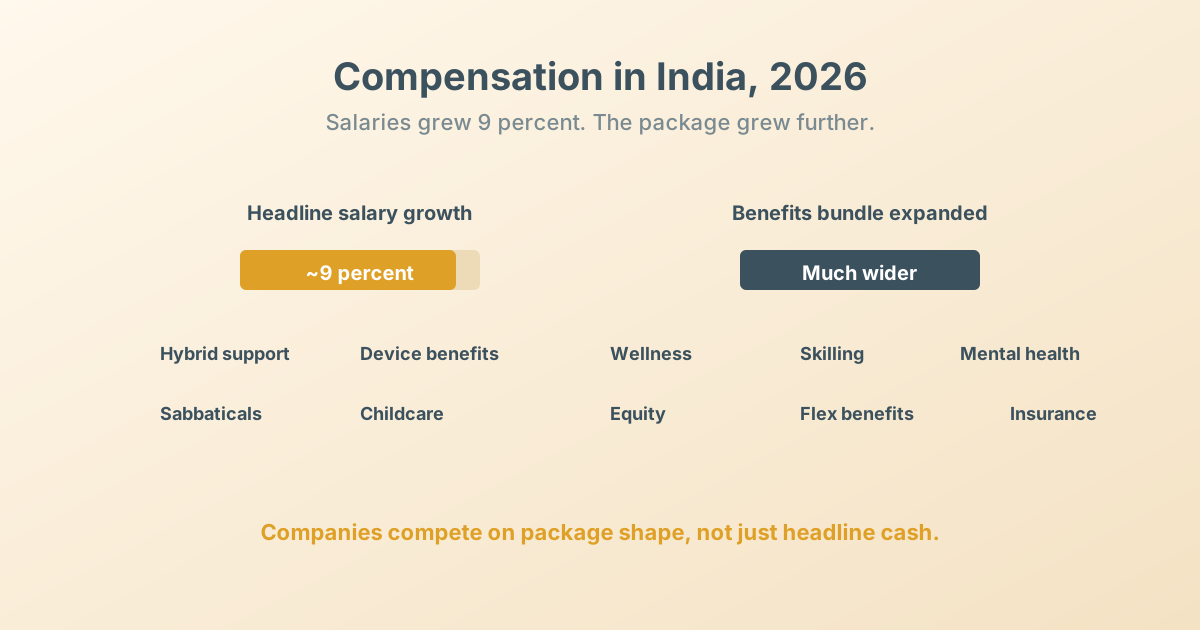
EY India's Future of Pay 2026 report puts India Inc.'s projected salary increase at around 9.1 percent year-on-year - a marginal dip from 9.6 percent in 2024.[¹] By global standards 9 percent is still strong, but the curve has clearly flattened.
What the same report points out is that companies are no longer competing on cash alone. EY's framing is that compensation is becoming "sharper, more skills-led, more performance-led." Differentiation by what the employee is worth, rather than what their peers earn, has become the operating model.
Inside that frame, the benefits side of the package has expanded. The same EY work documents that 90 percent of survey respondents in India are now working in hybrid arrangements, and that flexibility is the single most cited attraction-and-retention factor among Indian knowledge workers.[²] Flexibility costs employers something to deliver. It is not free. But it is cheaper, per unit of retained employee, than equivalent cash.
What "benefits" actually includes in 2026
A few years ago, the benefits column on an Indian CTC sheet was thin: provident fund, gratuity, maybe insurance, and a small bucket of allowances. The 2026 version is wider.
Mainstream benefits now include some mix of:
- Health insurance for the employee and dependants
- Term life and group accident cover
- Wellness programmes and EAP (employee assistance) access
- Skilling and education reimbursement
- Hybrid-work allowances or structured support
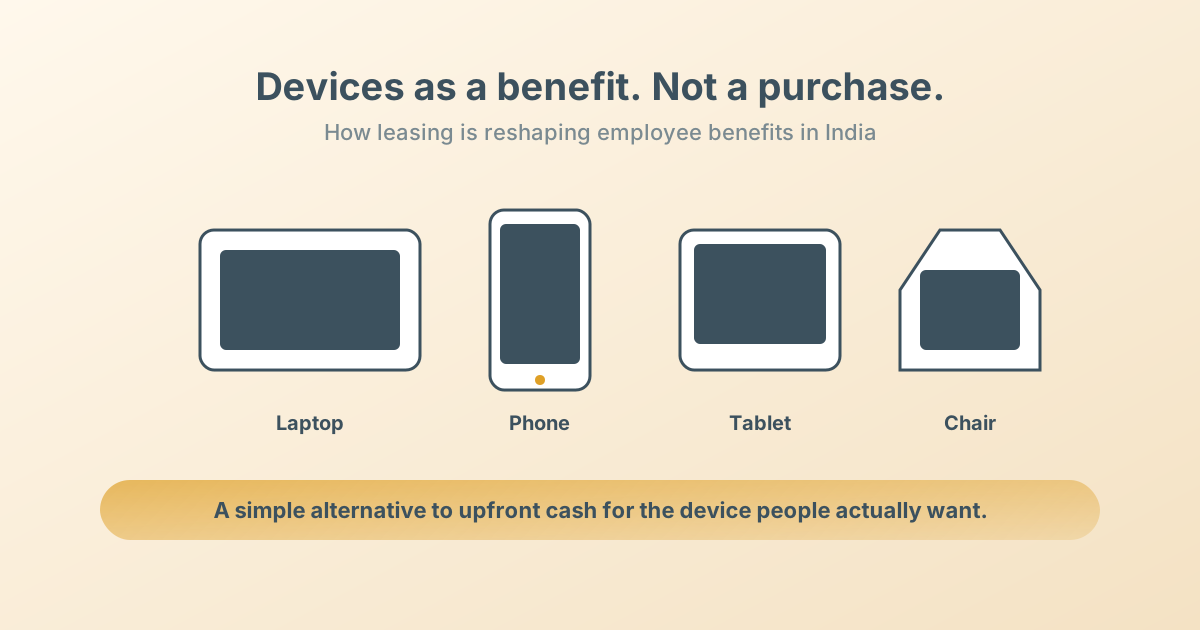
- Device benefits (laptops, phones, ergonomic furniture)
- Childcare and parental support
- Mental health benefits
- Sabbatical and time-off policies
- Equity, for the companies that offer it
What is striking is that few of these would have been worth listing in 2019. Several were not commonly offered at all. The shape of the bundle has thickened.
The Deloitte India Talent Competitiveness work has flagged this shift across sectors, and noted that organisations in PLI-designated sectors are competing especially hard on these dimensions, with measurable premiums for critical technical and managerial roles.[³] In other words: the benefits expansion is not evenly distributed. The sectors that are scaling hard are the ones that have grown the bundle most.
Why the shift happened
Three forces are doing most of the work.
The first is hybrid. Once knowledge work decoupled from the office desk, the question of what the employer owes the employee at home opened up. Device benefits, home-setup support, internet allowances, and ergonomic furniture have moved from "nice to have" to "expected" in many companies. We have written about the device-gap side of this in Hybrid work and the Indian device gap in 2026.
The second is talent competition. India's labour market for senior technical and product talent has stayed tight. Companies that cannot beat each other on cash because the headline numbers are everywhere have learned to compete on package shape instead.
The third is regulatory and structural. India's tax framework has long allowed for richer salary structuring, but the operational tools to deliver it - especially to junior employees - have only become widely available recently. Modern HR-tech and benefits platforms have lowered the cost of administering a sophisticated benefits bundle. What used to take a benefits consultant per company now takes a SaaS dashboard.
Where the next two years are heading
Two trends look durable.
The first is that flexibility and choice become the design principle. Employees increasingly expect to pick their own mix from a list, not receive a fixed bundle. The benefits industry has started calling this "modular compensation" or "flexible benefits," and the better implementations let employees move budget between categories within sensible guardrails.
The second is that benefits become measurable. HR teams have started reporting benefit usage and benefit ROI to their boards alongside salary outflow. A benefit that is offered but not used is, in real terms, money the company spent for no return. Better measurement is making companies more deliberate about which benefits they actually fund.
What this means for HR teams
A few practical implications follow from this shift.
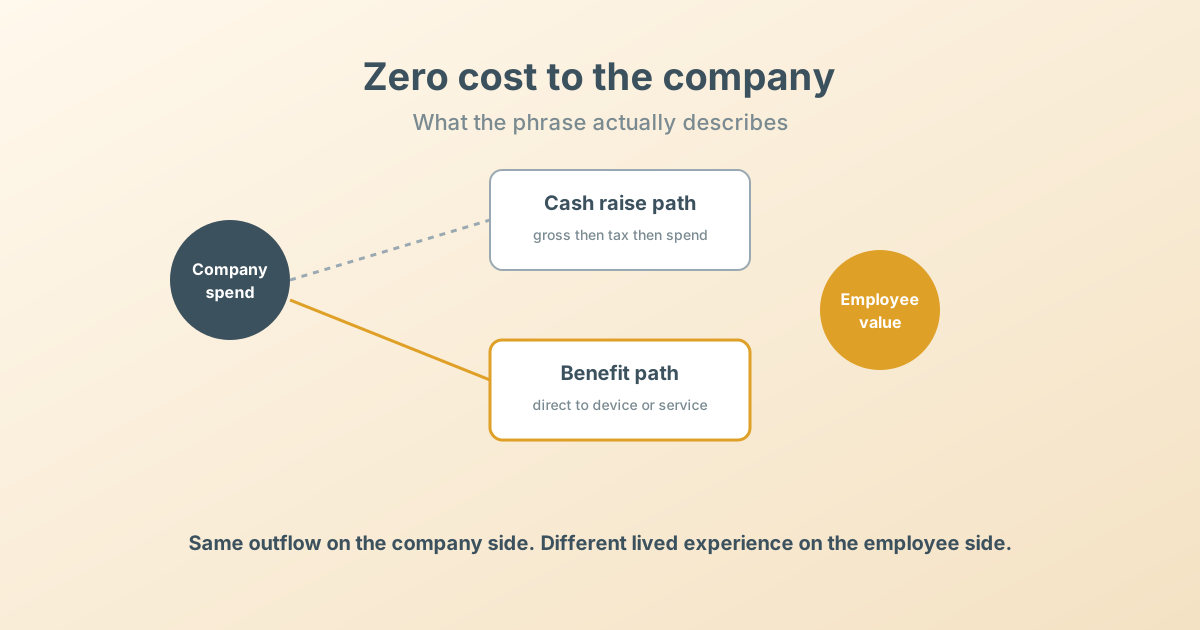
The cash raise is no longer the only lever, but it is also not optional. Strong companies are doing both: a competitive cash baseline and a thoughtful benefits design.
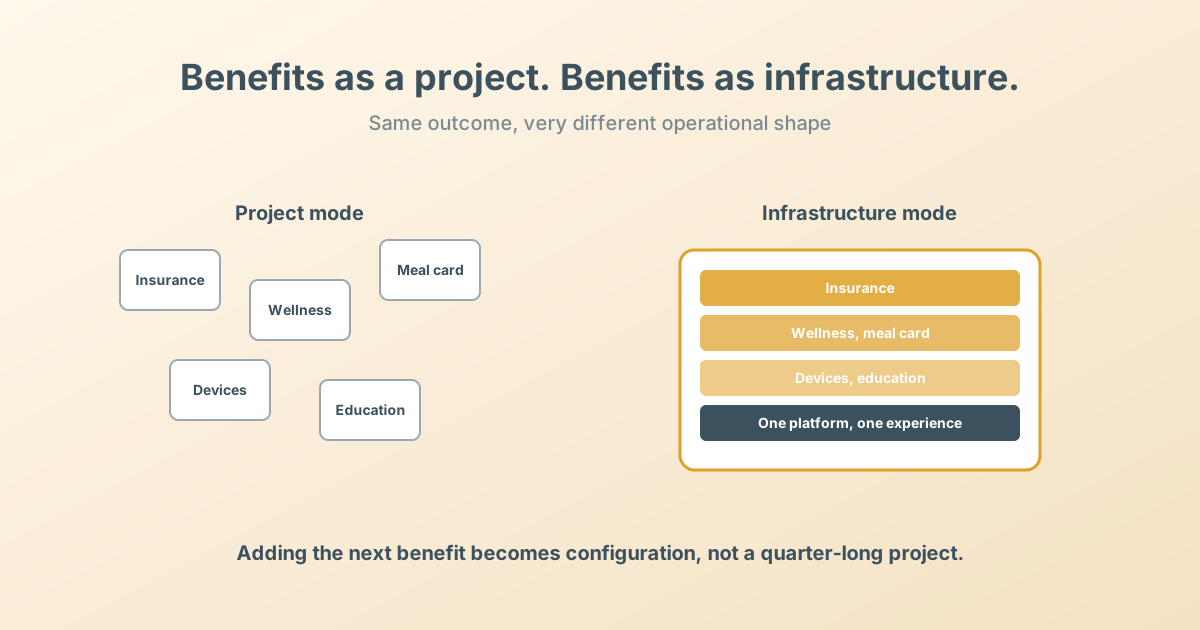
The benefits design has to be operationally light. If administering a benefit eats more HR time than the benefit is worth, it gets dropped in the next budget cycle. Programmes that come with their own administration - leasing platforms, insurance providers, wellness vendors - have an advantage over ones that require HR to build from scratch.
The benefits design has to be measurable. Companies that can show the board that 80 percent of employees use a benefit have an easier time defending the spend than companies relying on intuition.
And the benefits design has to feel coherent. A package that is a long list of small line items is harder for the employee to understand than a package that is a clear, shorter list. Coherence is a feature.
Where device leasing fits
Among the newer benefits, device leasing has earned a particular kind of attention through 2025 and into 2026 because it scores well on most of the design criteria.
It is choice-led: the employee picks the device.
It is operationally light: a platform handles procurement, logistics, support, and refresh.
It is measurable: usage is essentially 100 percent (an employee with a laptop on lease is using a laptop on lease).
It is coherent: it sits in a recognisable bucket of "things the employer makes easier" rather than a fragmented allowance.
For an overview of how device leasing actually works for Indian employees, see How device leasing is changing employee benefits in India. For why a benefit can win against an equivalent cash raise, see When a small benefit beats a bigger salary hike.
Where to read next
- How device leasing is changing employee benefits in India
- Hybrid work and the Indian device gap in 2026
- The employee benefits Indian companies actually offered in 2025
If you would like the InnovRent team to walk through where a structured device benefit could sit in your 2026 package design, hello@innovrent.com is the way in.
Sources
- EY India, Future of Pay 2026 press release. https://www.ey.com/en_in/newsroom/2026/02/india-inc-projects-9-point-1-percent-salary-increase-in-2026-as-compensation-becomes-sharper-more-skills-led-ey-future-of-pay-2026-report
- EY India, The future of pay: Holistic rewards redefining talent strategies. https://www.ey.com/en_in/insights/workforce/the-future-of-pay-holistic-rewards-redefining-talent-strategies
- EY India, Compensation trends 2026: Future of pay. https://www.ey.com/en_in/insights/workforce/how-competitive-compensation-is-reshaping-the-future-of-pay